

sustainability lab
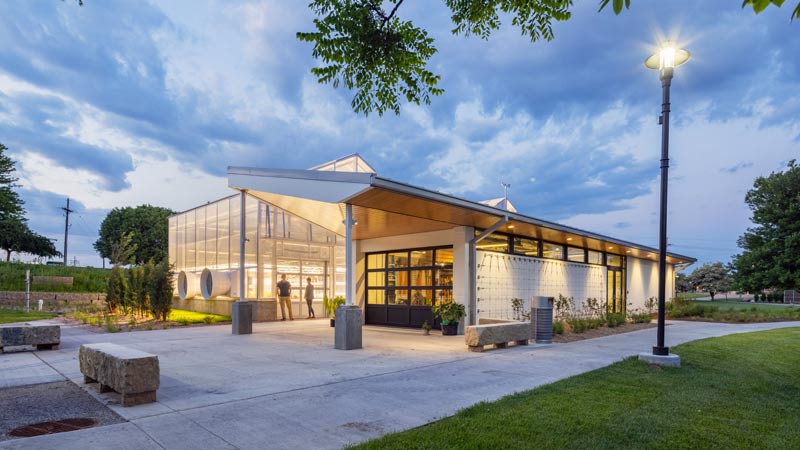
The sustainability lab is located on Bellevue University’s main campus, to the north of the R. Joe Dennis Learning Center (see area map).
contributing to a sustainable future
Bellevue University students and visitors can explore sustainability management practices in a 7,000-square-foot learning lab and multi-purpose greenhouse designed for education and research. The facilities offer opportunities for both hands-on and virtual learning.
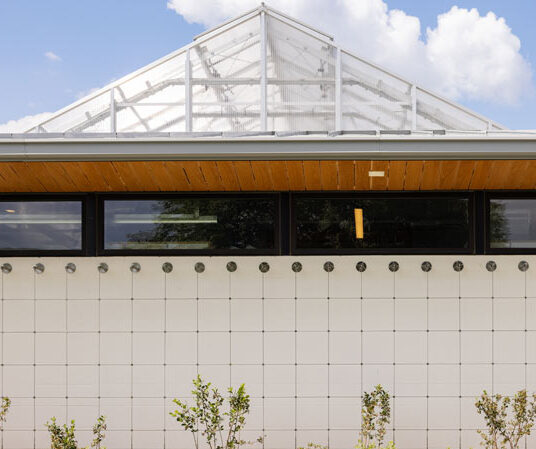
sustainable features and practices
Key sustainable features in the lab include:
- Roof panels that convert sunlight and wind into usable electric power.
- Rainwater harvesting systems for crop irrigation, controlling run-off and soil erosion.
- Multiple plant varieties that support native ecosystems.
- Outdoor learning spaces, including a native plant hillside where students and classes can gather for observation, discussion, and collaboration.
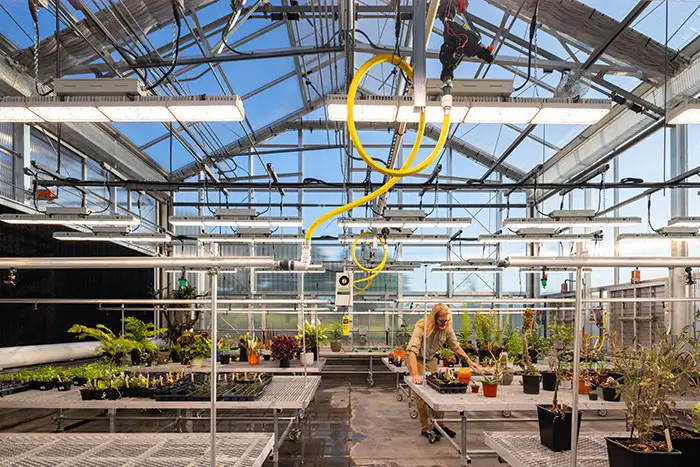
state-of-the-art greenhouse
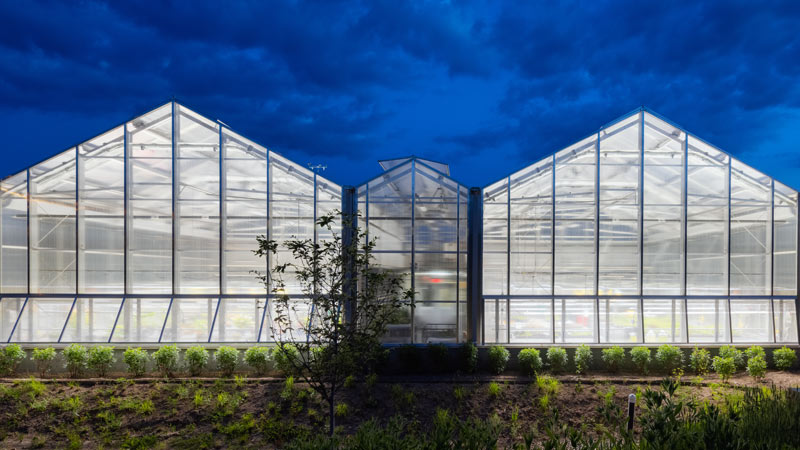
The greenhouse next to the sustainability lab features:
- Advanced design for teaching sustainability and conducting sustainability research projects.
- Temperate and tropical climate zones for studying and growing a variety of plants.
- Programmable LED lighting, temperature, watering, and fertilization systems.
- Aquaponic and hydroponic tanks that allow plants and fish to grow together.
outside biofuel algae pond
Located next to the greenhouse and lab is a pond reserved for studying algae byproducts. The pond allows faculty and students to:
- Grow algae or microscopic aquatic plant life, to capture solar energy.
- Harvest algae and extract energy as usable biofuel.
- Provide a cleaner, renewable alternative to greenhouse gas-producing fossil fuels.
The Bellevue University Sustainability Lab and Greenhouse are possible thanks to generous grants from the Council of Independent Nebraska Colleges Foundation (CINCF). Support for the labs has come from the Nebraska Environmental Trust (NET) and the Nebraska Statewide Arboretum.