

Esports Explained: What They Are, How They Work, and Why They’re Considered a Sport
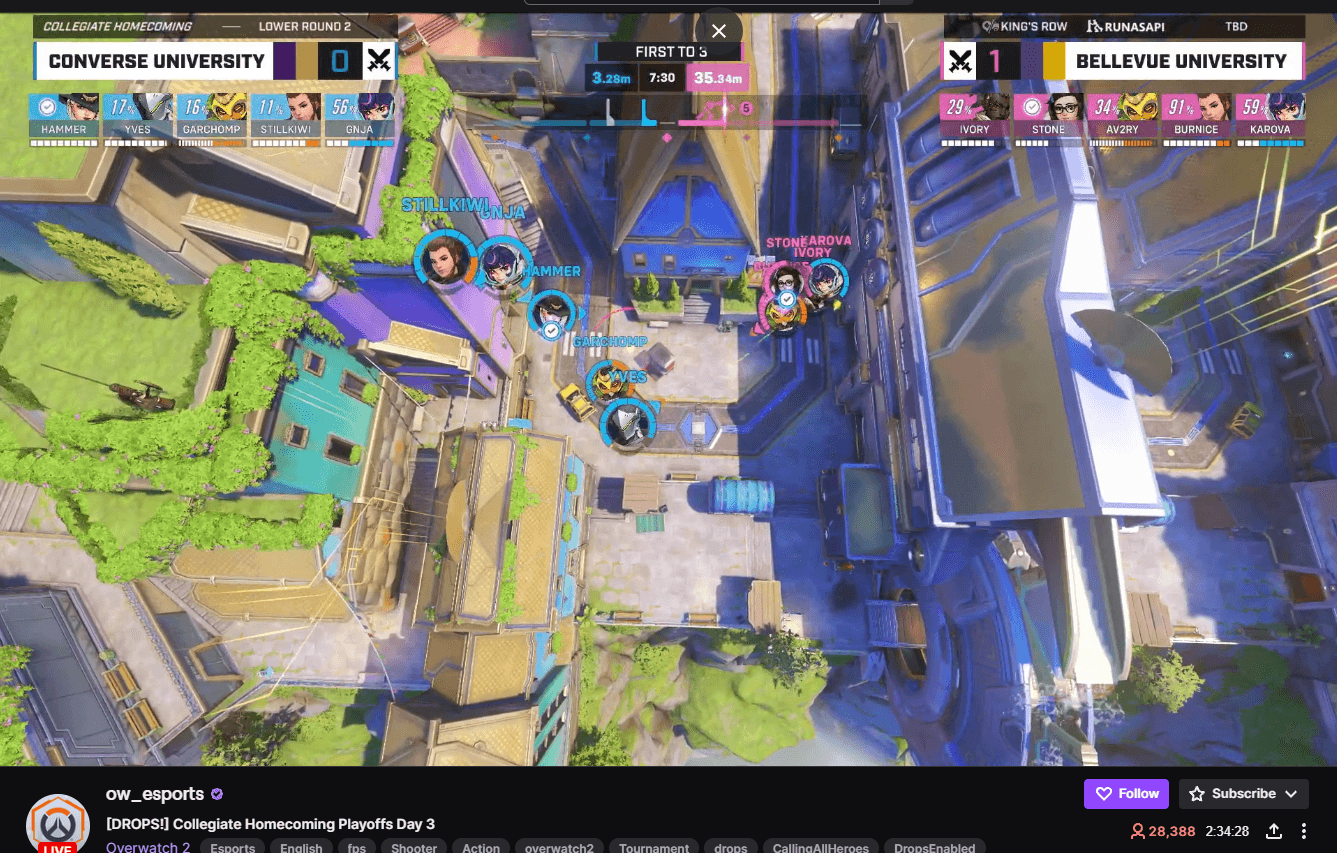
Esports are organized, competitive video games where individuals or teams compete under structured rules, leagues, and seasons—much like traditional sports, just played in a digital arena. What once looked like a niche hobby has grown into a global industry, with professional teams, dedicated coaches, and a global audience projected to surpass 550 million viewers by 2025, fueled by mobile gaming and live-streaming growth.
But Esports aren’t just about what happens on screen. They emphasize strategy, teamwork, communication, and discipline—skills that are increasingly recognized on college campuses as meaningful tools for student engagement and career readiness. At Bellevue University, Esports are part of a broader focus on helping learners turn their interests into opportunities that support long-term success.
Whether you’re a prospective student, a parent, or an educator, this guide breaks down what Esports are, how they work, and why they’ve earned a place in higher education.
What Are Esports?
Esports, short for electronic sports, are organized, competitive video gaming events where individuals or teams compete in structured leagues or tournaments. Unlike casual gaming, Esports emphasizes formal competition, defined rules, skill-based performance, and consistent practice supported by coaching and strategy.
Common Esports titles include League of Legends, Overwatch, Rocket League, Valorant, Fortnite, and Counter-Strike. Each game has its own competitive ecosystem, rulesets, and team dynamics—much like different traditional sports.
How Do Esports Work?
While Esports may look fast and spontaneous on screen, they’re supported by a highly organized ecosystem.
Game publishers create and maintain competitive titles, define core rules, and issue updates that keep play balanced. Leagues and conferences organize seasons, schedules, eligibility requirements, and championships, especially at the collegiate level. Teams then train with intention, following structured practice schedules that include scrimmages, strategy sessions, and gameplay review.
At the highest levels, Esports training is intensive. Professional players often practice six to eight hours per day, supported by analysts, performance coaches, and structured review sessions. Collegiate programs adapt this model at a student-appropriate scale, emphasizing preparation, accountability, and balance alongside academics.
Competition, Stakes, and Visibility
Esports competitions range from regular league matches to high-profile tournaments streamed to national and global audiences. Many collegiate matches are broadcast live, complete with commentators and analysts, giving students visibility beyond their campus. According to SQ Magazine, the global Esports industry is expected to generate $1.79 billion in revenue in 2025, a 16.2% increase from 2024, with continued dominance by sponsorship and media rights—further reinforcing Esports’ role as a professionalized, media-driven ecosystem.
This streaming environment also creates opportunities in broadcasting, production, marketing, and content creation—extending the impact of Esports beyond competition alone.
Innovation at the Collegiate Level
As Esports continue to grow, colleges aren’t just participating—they’re innovating. Some universities now host their own leagues to fill gaps in the competitive landscape and create more opportunities for student-athletes.
Bellevue University is one of them. In addition to competing in national collegiate leagues, Bellevue University launched the Bellevue Brawlhalla Collegiate League (BCL)—a developer-supported competition designed specifically for college players. The BCL provides structured seasons, prize pools, and national brackets, giving students a professional-style competitive experience while helping shape the future of collegiate Esports.
Together, publishers, leagues, teams, and broadcasters form an ecosystem that mirrors traditional sports in structure—but expands opportunity through technology, accessibility, and global reach.
Why Are Esports Considered a Sport?
The debate around whether Esports are “real sports” often centers on physicality. But most modern definitions of sport go beyond physical exertion alone.
Esports are considered a sport because they require:
- High-level skill and training: Reaction time, precision, and strategic thinking are developed through practice.
- Competition under standardized rules: Matches follow strict formats and regulations.
- Teamwork and strategy: Especially in team-based games.
- Mental endurance and focus: Matches can last hours and require sustained concentration.
- Performance under pressure: Just like traditional athletes, Esports competitors perform in high-stakes environments.
- Elite reaction times: Research shows Esports players and football players have similar reaction times.
Many collegiate athletic departments now recognize Esports alongside traditional sports because of these shared characteristics.
The History and Evolution of Esports
Competitive gaming didn’t appear overnight. Long before sold-out arenas and livestreamed championships, Esports began as small, informal competitions driven by curiosity, skill, and community.
In the 1970s and 1980s, early video game competitions took place in arcades and on university campuses, where players gathered to test high scores and reflexes. These events were simple, but they planted the idea that video games could be competitive, social, and spectator-friendly.
The 1990s marked a turning point with the rise of personal computers and local area networks (LANs). Players could now compete head-to-head in the same physical space, leading to organized tournaments and the first recognizable Esports communities. Strategy, teamwork, and specialization began to matter more than ever.
As internet access expanded in the early 2000s, Esports moved online. Players no longer needed to be in the same room—or even the same country—to compete. Online leagues and international tournaments emerged, setting the stage for global competition and professional play.
The 2010s accelerated everything. Streaming platforms transformed Esports into a spectator sport, allowing fans to watch matches live, follow teams, and engage with players in real time. Sponsorships, professional contracts, and large prize pools followed, pushing Esports into the mainstream and legitimizing it as an industry.
Today, Esports continue to gain mainstream recognition, with international organizations like the International Olympic Committee exploring how competitive gaming fits within the future of global sport.
Skills and Life Outcomes from Esports Participation
Participation in Esports develops more than gaming ability. Students involved in competitive gaming often build transferable skills that employers value across industries, including:
- Strategic thinking and problem-solving
- Communication and teamwork
- Leadership and decision-making
- Time management and discipline
- Adaptability and resilience
Research from the Network of Academic and Scholastic Esports Federations (NASEF) shows that structured Esports participation supports improved teamwork, communication, and academic engagement—reinforcing the value of Esports as an educational tool, not just a competitive outlet.
“Esports isn’t just about winning games; it’s about building futures. At Bellevue University, we’re demonstrating that your passion for gaming can lead to a college degree and a fulfilling career.” – David Castillo-Ferrin, Bellevue University Esports head coach
Esports and College Decisions
For students passionate about gaming, Esports can be a meaningful part of the college experience. The industry is no longer a fringe offering in higher education. More than 500 U.S. colleges and universities now support varsity or club-level Esports programs, many with scholarships, coaching staff, and dedicated arenas, including Bellevue University.
What to consider:
- Scholarships: Many universities, including Bellevue University, offer Esports scholarships that recognize talent and commitment.
- Facilities: Bellevue student-athletes train in a professional-grade Esports arena designed for both practice and competition.
- Academic balance: Strong programs prioritize coursework, eligibility standards, and advising support.
Questions families should ask:
- How is academic performance supported for Esports athletes?
- What does coaching and practice structure look like?
- What opportunities exist beyond playing, such as broadcasting or event management?
See a full list of common student and parent FAQs.
Esports vs. Traditional College Sports
Esports and traditional college sports may look different on the surface, but they share many core qualities. Both require commitment, teamwork, accountability, and consistent practice. At the same time, Esports bring unique elements—like digital infrastructure and global accessibility—that expand the definition of collegiate competition.
While the methods differ, both traditional and Esports programs cultivate discipline, leadership, and a sense of accountability. Students in either environment gain valuable experience balancing practice, performance, and academics—skills that translate beyond the field or the screen.
Careers Around Esports (Beyond Playing)
According to Esports Insider, “recent data shows that there were about 12,500 active roles in the industry in early 2025, spanning competitive play, analytics, broadcasting, and event operations. Historical hiring trends from platforms like Hitmarker also reflect sustained growth in Esports-related jobs, with listings expanding by roughly 5% in 2021. By 2025, analysts estimate the broader Esports ecosystem may support up to 500,000 global jobs, underscoring how the sector increasingly mirrors traditional sports in its employment impact.”
- Game Design & Development: Understanding game mechanics, strategy, and player behavior can lead to roles in game design, testing, or development.
- Broadcasting & Content Creation: Livestreamed matches and highlight reels offer experience in streaming, video production, social media, and commentary, preparing students for careers in digital media and Esports production.
- Event Management & Operations: Organizing tournaments and managing league logistics teaches planning, coordination, and leadership skills applicable to roles as event coordinators, administrators, or operations managers.
- Coaching & Education: Experienced players can transition into coaching or mentorship, guiding the next generation of athletes while developing leadership expertise.
- Business, Marketing & Entrepreneurship: Esports programs provide insight into sponsorships, team management, merchandising, and partnerships—skills useful for marketing, management, and entrepreneurial ventures.
Many media, marketing, and computer-related careers in Esports are projected to grow faster than average over the next decade, reflecting broader demand for digital and technical skills.
Parents’ FAQ: Health, Balance, and Student Success
For many parents, Esports raises practical questions about wellness, academics, and long-term outcomes. Collegiate programs are designed to address these concerns by treating Esports as a structured, student-centered activity—not unregulated screen time.
How do programs support mental health?
Competitive gaming requires concentration, communication, and emotional control—especially in high-pressure situations. Collegiate programs often address mental health by:
- Promoting healthy practice limits
- Encouraging teamwork and peer support
- Connecting students with campus mental health and wellness resources
Just as traditional student-athletes are supported as whole students, not just competitors, Esports participants are supported as whole students, not just competitors.
Will Esports interfere with academics?
At the college level, academics come first. Most Esports programs require students to remain in good academic standing to compete. Structured schedules help students balance:
- Class time and coursework
- Practice and competition
- Study habits and personal time
Academic advisors, coaches, and support staff work together to help students manage their responsibilities and stay on track toward graduation.
What skills do students gain beyond gaming?
Beyond competition, Esports help students develop transferable skills such as time management, accountability, teamwork, communication, and problem-solving. These skills support success not only in college but also in future careers across many fields.
The Future of Esports
Esports continue to evolve alongside advances in technology and education. Tools like AI-powered performance analytics and emerging VR training environments are shaping how players train and compete—mirroring innovations across STEM and business fields.
Esports audiences and participants are also becoming more diverse, with Nielsen research indicating that roughly 22% of Esports viewers worldwide are female, and more recent estimates suggest that the proportion may be as high as 30% or more, reflecting broader cultural shifts across gaming and technology.
As Esports become more integrated into higher education, they will continue to support career exploration, digital fluency, and workforce-ready skill development.—connecting competition, innovation, and education in new and meaningful ways.
Conclusion: Esports as a Bridge Between Passion and Purpose
Esports represent a modern pathway where competition, technology, and education intersect. When thoughtfully integrated into higher education, they help students build transferable skills, develop leadership, and prepare for digitally driven careers.
At Bellevue University, Esports channel student enthusiasm into structured, academically grounded opportunities that foster accountability and employability—proving that when personal interests align with practical education, students are better equipped for what comes next.
ready to
learn more?
Fill out the form, and an Admissions Counselors will be happy to answer all your questions.
let's talk.